
How to Select the Right Flexible Metal Hose for Your Industrial Application
Flexible metal hoses play an important role in industrial piping systems where traditional rigid connections cannot provide enough flexibility.
They help accommodate:
- Equipment movement
- Vibration
- Thermal expansion
- Installation limitations
- Pipe misalignment
However, selecting the correct metal hose requires more than choosing the correct diameter.
A suitable hose assembly depends on multiple factors, including:
- Operating conditions
- Hose construction
- Material compatibility
- Connection type
- Installation environment
- Movement requirements
Choosing the wrong hose design may lead to premature replacement, installation difficulties, or unexpected downtime.
This guide explains the main factors engineers and industrial buyers should consider before purchasing a flexible metal hose.
1. Understand Your Application First
Before selecting a metal hose, understand how the hose will work in the system.
Important questions include:
What is the hose transporting?
The process medium affects material selection.
Examples include:
- Air
- Steam
- Gas
- Water
- Hydraulic fluids
- Chemicals
Different media may require different material considerations.
How does the hose move?
Metal hoses are commonly used for:
- Vibration absorption
- Thermal expansion compensation
- Equipment movement
- Flexible connection
The movement direction matters.
Examples:
- Axial movement
- Lateral movement
- Angular movement
A hose designed for one movement type may not perform well in another installation.
2. Choose the Correct Hose Construction
Flexible metal hoses usually consist of:
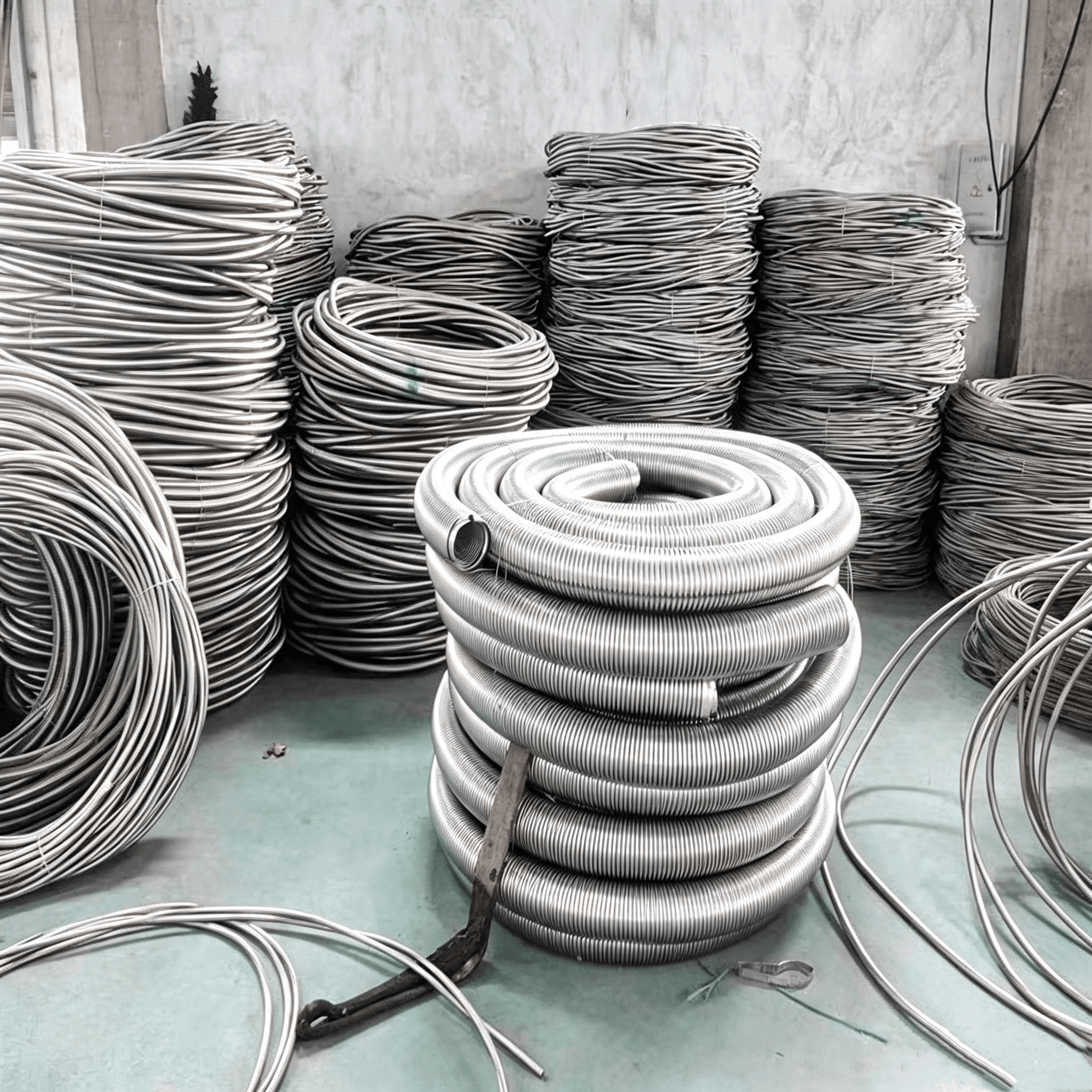
Corrugated Metal Hose
The corrugated structure provides flexibility.
It allows the hose to bend and accommodate movement.
Stainless Steel Braid
The braid provides additional mechanical support.
It helps control hose elongation and improves assembly stability.
The correct combination depends on:
- Application
- Movement
- Operating environment
- Connection requirements
3. Select Suitable Materials
Material selection affects:
- Corrosion resistance
- Strength
- Service environment
- Compatibility with the medium
Common considerations include:
Stainless Steel
Widely used in industrial applications because of its corrosion resistance and durability.
Other Materials
Some applications may require alternative materials depending on operating conditions.
When selecting material, consider:
- Internal medium
- External environment
- Temperature exposure
- Mechanical requirements
4. Consider Temperature Requirements
Temperature is one of the most important selection factors.
Industrial buyers should provide:
- Normal operating temperature
- Maximum expected temperature
- Heating or cooling cycles
- External environmental conditions
A metal hose used near heat sources may require different considerations compared with a hose used in a normal industrial environment.
5. Consider Pressure Requirements
Pressure is another important parameter.
Provide:
- Working pressure information
- System conditions
- Pressure fluctuation information
The hose assembly design includes more than the hose itself.
The manufacturer also needs to consider:
- Hose size
- Braid configuration
- End connections
- Application requirements
6. Select the Correct End Connections
The end fitting often determines whether the hose can integrate correctly into the system.
Common connection types include:
- Threaded connections
- Flanges
- Weld ends
- Custom fittings
Provide:
- Connection standard
- Size
- Installation drawings
- Existing sample if available
Incorrect connection information can make an otherwise suitable hose unusable.
7. Determine the Required Length
Length affects flexibility and movement capability.
A hose that is too short may create unnecessary stress.
A hose that is too long may create:
- Uncontrolled bending
- Sagging
- External contact
When replacing an existing assembly, provide:
- Overall length
- Installed position photos
- Connection orientation
8. Custom Metal Hose Assembly Solutions
Many industrial applications require more than a standard hose.
Custom solutions may involve:
- Custom length
- Special fittings
- Different connection types
- Specific assembly requirements
Providing drawings, samples, or application details helps manufacturers understand the actual requirement.
Metal Hose Selection Checklist
Before ordering, prepare:
- Medium carried by the hose
- Operating temperature
- Working pressure
- Hose diameter
- Required length
- Movement type
- End connection
- Installation environment
FAQ
How do I choose the correct metal hose?
Start with the application conditions, including medium, temperature, pressure, movement, and connection requirements.
What information should I provide when ordering a metal hose?
Provide dimensions, operating conditions, connection details, and installation information.
What is the difference between corrugated hose and braided metal hose?
Corrugation provides flexibility, while braid provides additional mechanical reinforcement.
Can a metal hose be customized?
Yes. Manufacturers can evaluate custom length, fittings, connections, and assembly requirements.
CTA
Need Help Selecting a Metal Hose Assembly?
Send us your:
- Drawing
- Existing sample
- Dimensions
- Application information
Our engineering team can review your requirements and recommend a suitable solution.