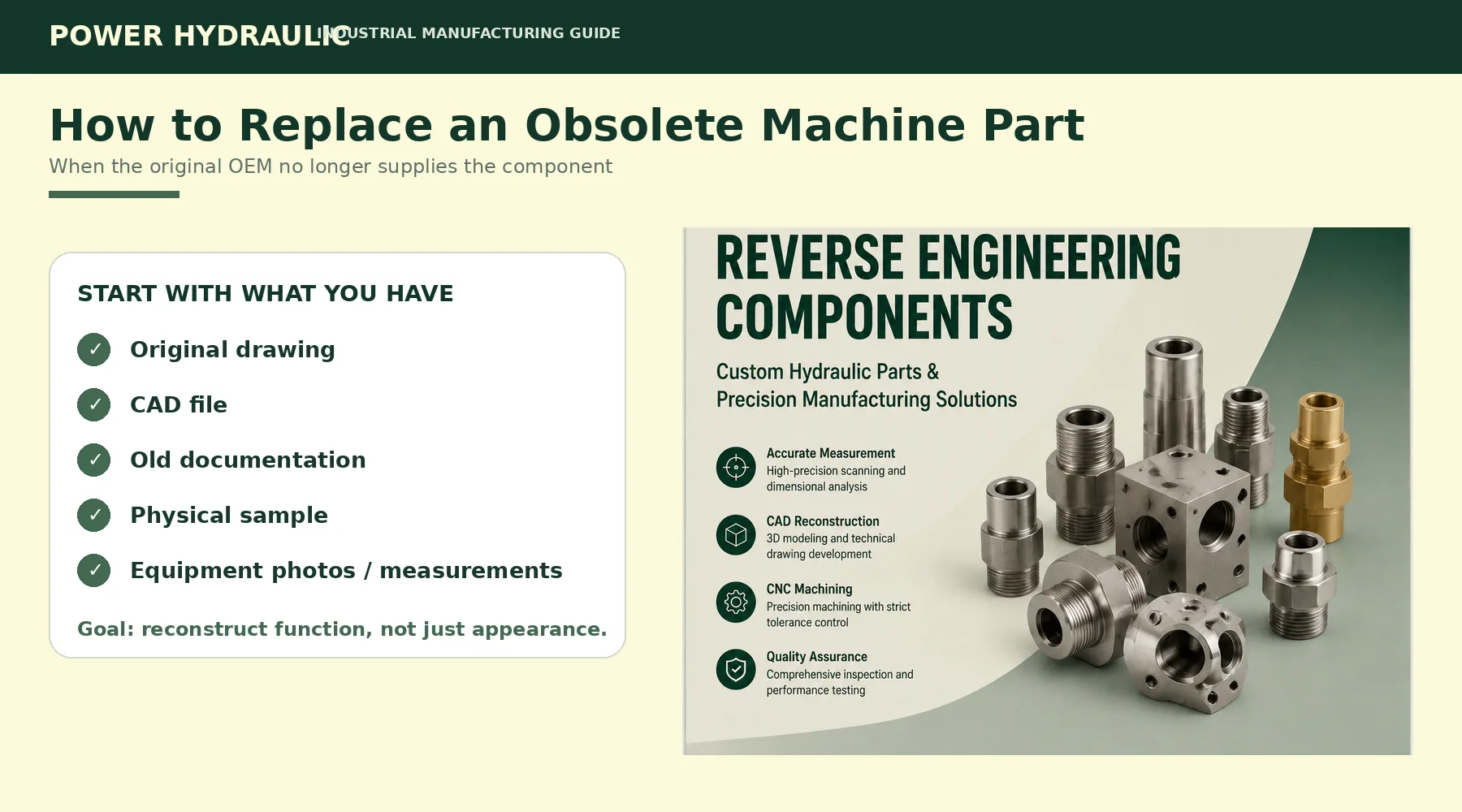

Can a Manufacturer Reproduce a Part From a Physical Sample?
In industrial manufacturing, customers often face a common challenge:
“We have the old part, but we no longer have the drawing. Can you manufacture a replacement?”
This situation happens frequently with:
- obsolete equipment
- discontinued components
- lost engineering drawings
- modified machinery
- unavailable original suppliers
Fortunately, manufacturers can often reproduce mechanical components by using an existing physical sample as a reference.
Through measurement, engineering analysis, CAD reconstruction, and CNC manufacturing, a worn or unavailable component can become the foundation for a new replacement part.
This process is commonly known as reverse engineering manufacturing or sample-based manufacturing.
However, reproducing a part from a sample requires more than simply copying its shape. Engineers must understand the part’s function, original design intent, and manufacturing requirements.
When Sample-Based Manufacturing Makes Sense
Manufacturing from a physical sample becomes valuable when traditional production information is unavailable.
Common situations include:
1. Lost Technical Drawings
Many industrial companies operate equipment that has been running for years.
Over time, original drawings may become:
- unavailable
- outdated
- stored in old systems
- lost during equipment upgrades
A physical component may be the only remaining reference.
2. Obsolete Machine Parts
Some industrial machines continue operating long after manufacturers stop supplying replacement components.
Customers may need:
- replacement shafts
- custom adapters
- fittings
- brackets
- mechanical blocks
- special components
Sample-based manufacturing provides an alternative solution for these situations.
3. Discontinued Supplier Components
When an original supplier no longer produces a part, companies may need a new manufacturing partner.
A physical sample allows engineers to evaluate whether they can reproduce or improve the component.
4. Modified Equipment
Industrial equipment is sometimes modified during operation.
The currently installed component may differ from the original design.
In these cases, manufacturers need to analyze the existing part and understand its actual working requirements.
What Can a Physical Sample Tell the Manufacturer?
A physical sample provides valuable information, including:
- external geometry
- connection design
- dimensions
- machining features
- assembly relationship
- wear conditions
However, a sample does not always reveal everything.
Engineers may also need additional information such as:
- application environment
- operating conditions
- mating components
- expected service requirements
- previous failure history
A successful reproduction process combines physical inspection with engineering evaluation.
Step 1: Understand the Part’s Function
Before manufacturing begins, engineers first need to understand what the component does.
The same shape can serve different purposes depending on the application.
Important questions include:
- Where is the component installed?
- What components connect with it?
- Does it carry mechanical loads?
- Does it control fluid flow?
- Does it require sealing performance?
- Has the original part experienced failure?
Understanding function helps manufacturers avoid producing a dimensionally similar part that does not perform correctly.
Step 2: Measure the Component
The next step involves detailed dimensional evaluation.
Engineers review important features such as:
Overall Geometry
Measurements include:
- length
- width
- height
- overall shape
- mounting structure
Threads and Connections
For mechanical and hydraulic components, connection details are critical.
Engineers evaluate:
- thread type
- thread size
- connection position
- fitting geometry
Hole Locations
Hole patterns influence assembly compatibility.
Important measurements include:
- hole diameter
- hole spacing
- center position
- mounting relationship
Sealing and Mating Surfaces
For components used in hydraulic or industrial systems, sealing areas require special attention.
Engineers review:
- contact surfaces
- flatness requirements
- mating dimensions
- sealing interfaces
Step 3: Identify Wear and Deformation
An old sample may not accurately represent the original design.
Years of operation may create:
- surface wear
- corrosion
- deformation
- previous repairs
- dimensional changes
Blindly copying a worn component may reproduce existing problems.
Experienced manufacturers evaluate whether measured dimensions represent:
- original design requirements
- normal wear
- previous damage
This step improves replacement-part reliability.
Step 4: Determine Material Requirements
Material selection affects:
- strength
- corrosion resistance
- machining process
- service life
When the original material information is unavailable, manufacturers evaluate factors such as:
- application environment
- operating conditions
- component function
- wear requirements
Common material options for custom mechanical components include:
- stainless steel
- carbon steel
- aluminum
- brass
- engineering plastics
The final material choice should match the component’s actual working conditions.
Step 5: Reconstruct the CAD Model and Manufacturing Drawing
After measurement and engineering analysis, manufacturers can create a digital model.
The process usually includes:
- Collecting dimensional information
- Creating a CAD model
- Preparing manufacturing drawings
- Reviewing critical dimensions
- Confirming production requirements
CAD reconstruction helps transform an existing physical part into a repeatable manufacturing solution.
Step 6: Manufacture a Prototype
For complex or critical components, prototype production provides an opportunity to verify the design.
A prototype allows customers to check:
- installation compatibility
- assembly performance
- dimensional accuracy
- functional requirements
Prototype manufacturing is especially useful before larger production quantities.
Step 7: Verify Fit Before Repeat Production
Before moving into repeat production, manufacturers should confirm:
- the replacement part fits correctly
- connection points match
- assembly requirements are satisfied
- important dimensions meet expectations
This verification step reduces risks during future production.

What Additional Information Should Buyers Provide?
A physical sample is valuable, but additional information helps manufacturers provide better solutions.
Recommended information includes:
Component Photos
Provide images showing:
- complete component
- connection areas
- damaged areas
- installation position
Equipment Information
Useful details include:
- machine type
- application
- working environment
Quantity Requirements
Production requirements can affect manufacturing planning.
Examples:
- prototype quantity
- small batch production
- repeat orders
Failure History
If the original part failed, explain:
- where failure occurred
- operating conditions
- previous modifications
This information helps engineers identify possible improvements.
What Types of Parts Can Be Manufactured From Samples?
Sample-based manufacturing can apply to many industrial components.
Examples include:
CNC Machined Components
- shafts
- sleeves
- bushings
- blocks
- adapters
Hydraulic-Related Components
- custom hydraulic adapters
- fittings
- connection components
- replacement parts
Mechanical Components
- brackets
- flanges
- mounting parts
- special assemblies
However, each project requires engineering evaluation to determine manufacturing feasibility.
Sample-Based Manufacturing RFQ Checklist
Before contacting a manufacturer, prepare:
- Physical sample photos
- Available dimensions
- CAD files (if available)
- Equipment information
- Material requirements
- Application information
- Required quantity
- Delivery expectations
Providing complete information helps manufacturers evaluate the project faster.
How Power Hydraulic Supports Custom Part Manufacturing
Power Hydraulic provides custom manufacturing solutions for industrial customers.
Based on experience with metal hose products and industrial components, we support customers requiring:
- custom mechanical parts
- CNC machined components
- replacement components
- OEM industrial parts
- small batch manufacturing
Customers can provide:
- physical samples
- drawings
- CAD files
- product photos
Our engineering team helps evaluate manufacturing requirements and develop suitable production solutions.
FAQ of manufacture part from a sample
Can you manufacture a part without a drawing?
Yes, in many cases, manufacturers can evaluate and reproduce components using physical samples, measurements, and engineering information.
Can a CNC manufacturer reproduce a component from a sample?
A CNC manufacturer can often create replacement components from samples by measuring dimensions, creating CAD models, and developing manufacturing drawings.
What if the original sample is worn?
Engineers should evaluate wear and deformation before creating a replacement design. The old sample may not represent the original dimensions.
How do manufacturers determine original dimensions?
Manufacturers use measurement, engineering analysis, and application information to reconstruct the required geometry.
Do I need to know the original material?
Not always. Manufacturers can evaluate suitable material options based on application requirements.
Should I order a prototype before batch production?
For complex replacement components, prototype verification can help confirm fit and function before repeat production.
Need to Reproduce a Part From a Sample?
Have an old component but no drawing?
Send us:
- photos of the part
- available measurements
- application information
- required quantity
Our engineering team can help evaluate your custom manufacturing project.
Manufacture part from sample