Stainless Steel Braided Hose vs Corrugated Metal Hose: What Is the Difference?
Industrial buyers sometimes use the terms stainless steel braided hose vs corrugated metal hose as though they describe two completely different products.
In many metal hose assemblies, however, they form two parts of the same system.
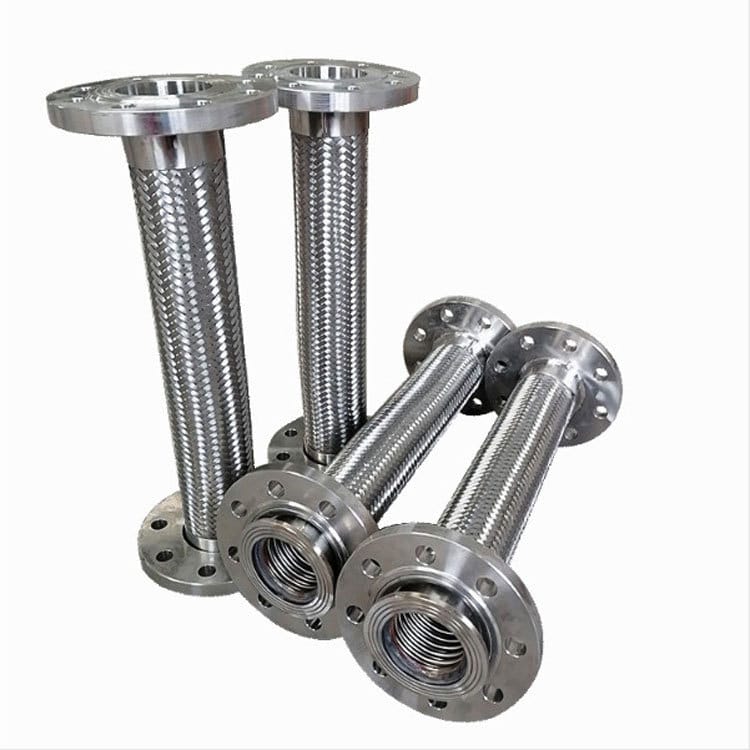
The corrugated metal hose provides flexibility and contains the process medium, while the stainless steel braid surrounds the corrugated hose and provides mechanical reinforcement.
Understanding this difference helps buyers specify the correct hose assembly.
What Is a Corrugated Metal Hose?
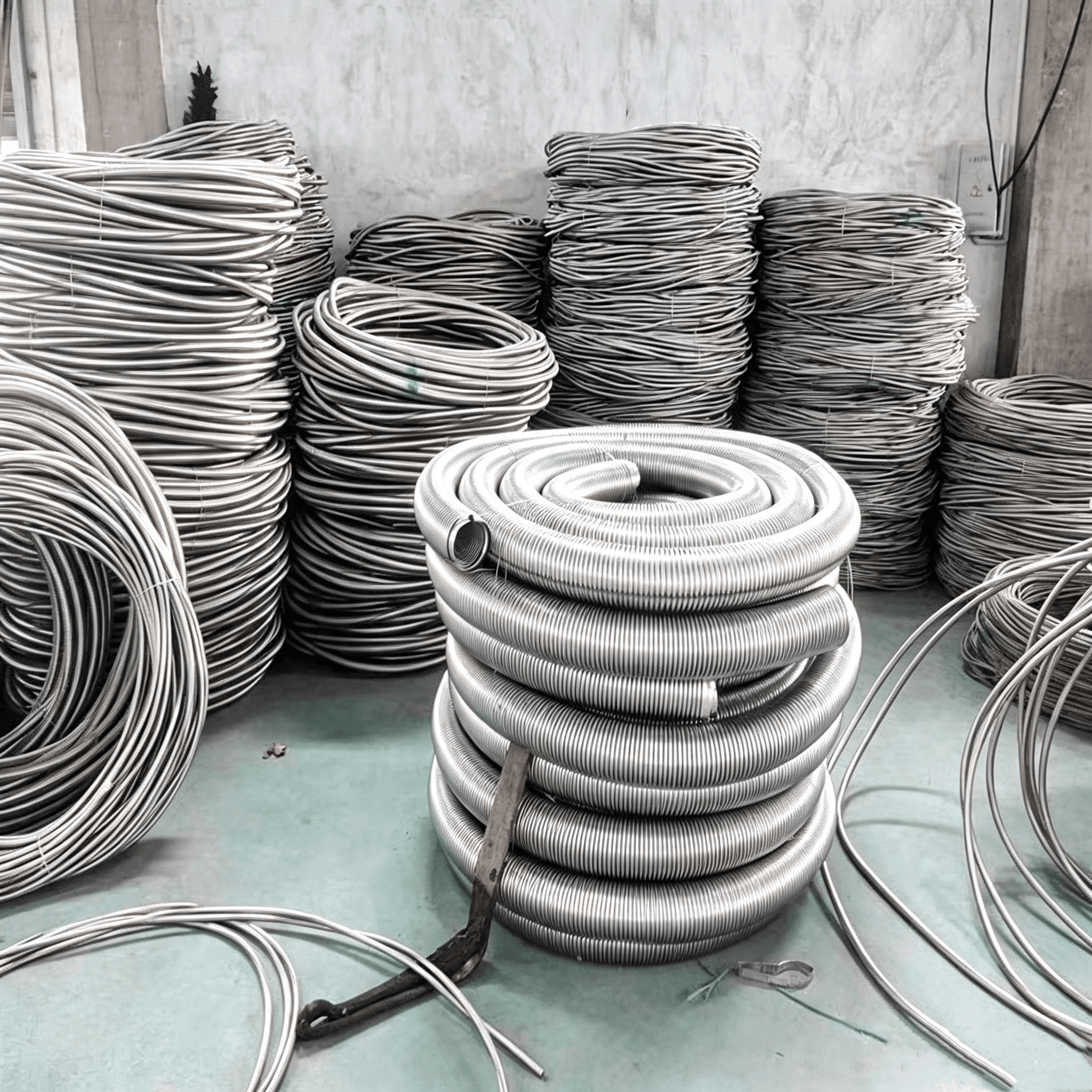
A corrugated metal hose begins as thin-wall metallic tubing.
Manufacturers form the tube into repeated corrugations, creating a flexible structure.
The corrugated hose normally forms the pressure-containing flexible core of the assembly.
Its main functions include:
- Carrying the process medium
- Providing flexibility
- Accommodating controlled movement
- Supporting vibration-related applications
- Helping manage thermal movement
The hose may use stainless steel or another suitable metallic material depending on the specification.
What Is Stainless Steel Braid?
Stainless steel braid consists of metal wires woven around the outside of the flexible hose.
The braid does not normally replace the corrugated hose.
Instead, it reinforces it.
When pressure acts inside a corrugated hose, the hose naturally experiences forces that can cause axial movement.
The braid helps restrain this behavior and contributes to the structural stability of the hose assembly.
Corrugated Hose = Flexible Core
A simple way to remember the difference is:
Corrugated hose provides flexibility.
The corrugations allow the metallic tube to bend and move.
Without corrugations, the tube would behave much more like a rigid pipe.
Stainless Steel Braid = Reinforcement
The braid has a different job:
The braid supports the hose under pressure and helps control elongation.
This distinction matters when buyers compare products.
A visually attractive braid does not automatically tell you the quality or suitability of the corrugated hose underneath it.
Both parts need to match the application.
Do All Metal Hoses Need Braid?
No.
Some applications use unbraided corrugated metal hose.
Others require:
- Single braid
- Multiple braid layers
- Specialized reinforcement
The correct configuration depends on pressure, temperature, diameter, movement, and the hose design.
Buyers should avoid assuming that more braid always means a better hose.
Why Braid Quality Matters
A poorly manufactured braid may affect hose performance.
Important factors can include:
- Wire material
- Braid coverage
- Uniformity
- Connection to the hose ends
- Compatibility with the hose design
The braid must work together with the corrugated hose rather than functioning as a separate decorative layer.
Why Corrugation Design Matters
The corrugation affects several performance characteristics.
These may include:
- Flexibility
- Bend radius
- Fatigue behavior
- Movement
- Hose stiffness
This explains why two hoses that look similar from the outside may perform differently.
Applications for Braided Corrugated Metal Hose
Braided metal hose assemblies commonly appear in:
- Pumps
- Compressors
- Industrial machinery
- Process equipment
- Steam systems
- Heating systems
- Exhaust systems
- Chemical equipment
- Marine equipment
In each application, engineers need to consider both the internal hose structure and external reinforcement.
Single Braid vs Multiple Braid
A single braid suits many applications.
Some systems may require additional reinforcement.
However, the decision should come from engineering requirements rather than visual preference.
Important information includes:
- Working pressure
- Operating temperature
- Hose diameter
- Required movement
- Medium
- Installation method
End Fittings Still Matter
The hose and braid may receive most of the attention, but the end connections also influence assembly reliability.
Typical end options include:
- Threaded connections
- Flanges
- Weld ends
- Custom machined fittings
A hose with the correct corrugation and braid still cannot function correctly if the fitting does not match the equipment.
What Should Buyers Ask a Supplier?
Before buying a metal hose assembly, ask:
- What is the hose material?
- What braid configuration does the assembly use?
- What operating information does the supplier need?
- What fittings are available?
- Can they manufacture custom end connections?
- Can they work from drawings or samples?
- How do they inspect finished assemblies?
These questions reveal more than asking only for the lowest price.
FAQ
Is braided stainless steel hose the same as corrugated hose?
Not exactly. The corrugated hose forms the flexible inner structure, while the stainless steel braid normally reinforces the outside of the hose.
Does stainless steel braid carry the fluid?
The corrugated hose normally contains the process medium. The braid primarily provides external reinforcement.
Is double braid always better?
No. The correct braid configuration depends on the actual working conditions.
Can custom end fittings be added?
Yes. Depending on the application, manufacturers can evaluate threaded, flanged, welded,d and CNC-machined connections.
CTA
Need a braided stainless steel metal hose for an industrial application?
Send your hose dimensions, operating conditions, ns and connection requirements to Power Hydraulic for review.