
How to Choose End Connections for a Flexible Metal Hose Assembly
When selecting a flexible metal hose assembly, many industrial buyers focus mainly on the hose body itself. However, the end connection is equally important.
The hose may have the correct material, size, and flexibility, but an unsuitable connection can prevent proper installation or affect the overall performance of the assembly.
Metal hose end fittings connect the flexible hose to equipment, piping systems, or other components. They determine how the hose integrates into the application and whether the assembly can be installed correctly.
Common connection considerations include:
- Connection type
- Thread specification
- Flange configuration
- Installation space
- Connection orientation
- Mating component requirements
For OEM buyers, maintenance teams, and industrial engineers, identifying the correct hose connection before ordering helps reduce replacement errors and improves installation efficiency.
This guide explains how to evaluate flexible metal hose end fittings and what information should be prepared before requesting a quotation.
Why End Connections Matter in a Flexible Metal Hose Assembly
A flexible metal hose assembly consists of multiple components:
- Flexible hose section
- Braid reinforcement (where applicable)
- End fittings
- Connection interfaces
Each part contributes to the final assembly.
The end fitting determines how the hose connects with the existing system.
A connection mismatch may cause problems such as:
- Installation difficulties
- Incorrect alignment
- Additional modification work
- Incompatibility with existing equipment
For this reason, selecting the correct end connection should be considered during the early design or replacement stage.
What Defines a Metal Hose End Connection?
A metal hose connection is not defined only by size.
Several factors should be evaluated together.
1. Connection Type
The first step is identifying the connection style.
Common types include:
- Threaded connections
- Flanged connections
- Weld end connections
- Customized connection designs
Different industrial systems may require different connection methods depending on equipment design and installation requirements.
2. Connection Size
The connection size is an important specification, but it is not the only information required.
For example, simply providing:
“1-inch connection”
may not provide enough information.
A complete evaluation may require:
- Connection type
- Thread information
- Mating component details
- Dimensional information
- Installation photos
Providing more details helps manufacturers avoid incorrect assumptions.
3. Connection Orientation
Some flexible metal hose assemblies require specific fitting orientation.
Examples include:
- Both ends aligned in the same direction
- Angled connections
- Customized orientation requirements
Incorrect orientation may create installation difficulties even when the connection size is correct.
Before ordering, check:
- How the hose is installed
- The direction of connected equipment
- Available installation space
Common Types of Flexible Metal Hose End Connections
Threaded Metal Hose Connections
Threaded connections are commonly used where compact installation and easy assembly are important.
When specifying threaded fittings, buyers should confirm:
- Thread type
- Thread size
- Male or female configuration
- Connection location
A thread description should contain enough information to avoid misunderstanding.
Flanged Metal Hose Connections
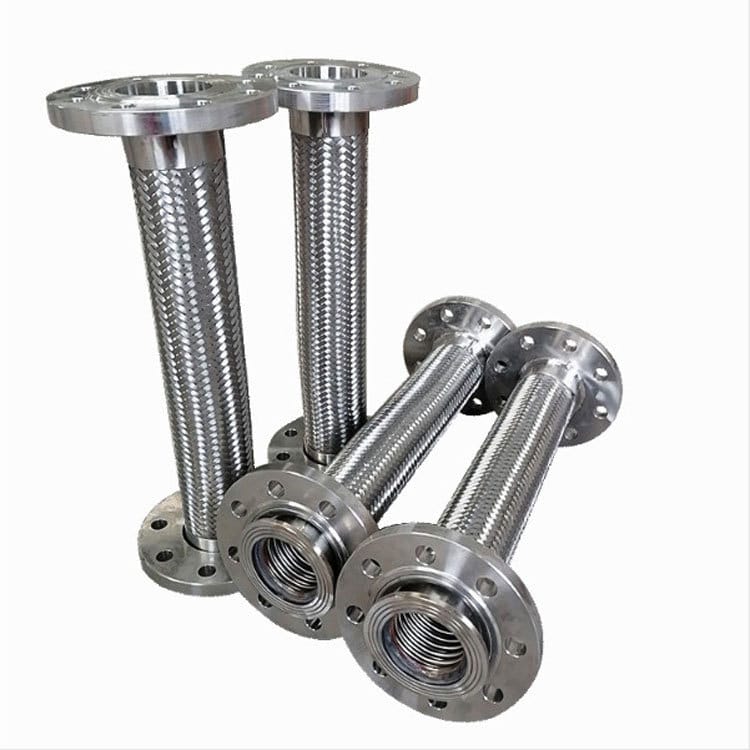
Flanged connections are commonly used in industrial piping systems where a bolted connection is required.
When selecting a flanged connection, consider:
- Flange dimensions
- Mating flange information
- Bolt arrangement
- Installation requirements
The flange should match the connected equipment correctly.
Weld End Connections
Weld end connections allow the hose assembly to be integrated into a piping system through welding.
These connections require careful consideration of:
- Pipe interface
- Installation method
- Welding requirements
- Final assembly position
Why Thread Size Alone Is Not Enough
One common mistake during replacement projects is providing only a thread size.
For example:
“The hose has a 2-inch thread.”
This information may still be incomplete.
A manufacturer may need to confirm:
- Thread type
- Connection direction
- Fitting shape
- Overall dimensions
- Installation position
Photos of the existing assembly can often provide valuable additional information.
What Information Is Needed for a Flanged Metal Hose?
For flanged assemblies, buyers should provide as much connection information as possible.
Useful information includes:
- Flange appearance
- Connection dimensions
- Existing equipment interface
- Installation photos
- Available drawings
When replacing an existing assembly, the original hose can provide an important reference.
However, manufacturers should evaluate the complete application rather than simply copying external appearance.
Fixed and Flexible Connection Considerations
Different applications have different installation requirements.
Some systems require:
- Fixed connection orientation
- Limited installation space
- Specific routing direction
- Easy maintenance access
The selected end fittings should support the actual installation environment.
Before ordering a flexible metal hose assembly, consider:
- Where will the hose be installed?
- How will it be connected?
- Is there enough clearance?
- Does the hose need a specific orientation?
Why Connection Orientation Matters
A correct connection type with incorrect orientation may still create installation problems.
Examples include:
- Fittings facing the wrong direction
- Limited space for installation
- Excessive hose twisting during assembly
The hose assembly should connect naturally without forcing the flexible section into an unsuitable position.
This consideration also relates to proper flexible metal hose installation.
Replacing an Existing Metal Hose: Should You Copy the Old Fittings?
An existing hose assembly is often the best starting point for replacement.
However, buyers should not automatically copy every detail without evaluation.
Before reproducing an existing hose, review:
- Is the current connection working correctly?
- Has the equipment changed?
- Did the previous hose fail?
- Is the installation condition still the same?
If the previous assembly experienced problems, copying the same configuration may repeat the issue.
What Photos Should You Send to Identify Unknown Hose Connections?
When requesting a replacement metal hose assembly, clear photos can greatly improve evaluation.
Recommended photos include:
Complete Assembly Photo
Shows:
- overall hose length
- fitting arrangement
- installation condition
Connection Close-Up
Shows:
- thread details
- flange shape
- fitting structure
Installation Photo
Shows:
- connected equipment
- available space
- routing condition
Dimension Reference Photo
A ruler or measurement reference helps manufacturers understand the approximate size.
Metal Hose Connection Selection Checklist
Before ordering a flexible metal hose assembly, prepare:
✓ Hose size
✓ Connection type
✓ Thread information
✓ Flange information
✓ Connection orientation
✓ Installation photos
✓ Existing drawing or sample
✓ Application information
Complete information helps manufacturers evaluate the right connection solution.
How Power Hydraulic Supports Custom Metal Hose Solutions
Power Hydraulic provides customized industrial hose and component solutions for customers requiring flexible connection products.
Customers can provide:
- Existing hose samples
- Product drawings
- Connection information
- Installation photos
- Application requirements
Our engineering team can review available information and help evaluate suitable flexible metal hose assembly solutions.
Related solutions:
- Flexible Metal Hose Assembly
- Custom Metal Hose Components
- OEM Industrial Components
- Custom Manufacturing Solutions
FAQ
What are metal hose end fittings?
Metal hose end fittings are connection components attached to the flexible hose section. They allow the hose assembly to connect with industrial equipment or piping systems.
How do I choose the correct metal hose fitting?
Consider the connection type, size, orientation, installation environment, and mating component requirements.
Is thread size enough to identify a hose connection?
No. Thread size alone may not provide enough information. Thread type, fitting shape, and installation details should also be confirmed.
What information should I provide when ordering a replacement metal hose?
Provide hose dimensions, connection photos, installation information, existing samples, or drawings if available.
Can existing hose fittings be copied for replacement?
Existing fittings can provide useful reference information, but manufacturers should evaluate whether the original design still matches the current application.
Why does connection orientation matter?
Incorrect orientation may make installation difficult and can introduce unnecessary stress during assembly.