What Is a Flexible Metal Hose Assembly and How Does It Work?
Flexible metal hose assemblies provide a reliable way to connect industrial piping and equipment where rigid pipe cannot easily accommodate vibration, movement, thermal expansion, or installation misalignment. Unlike conventional rubber or plastic hoses, a metal hose assembly normally uses a corrugated metallic hose as the flexible core, often combined with stainless steel braid and customized end connections.
Manufacturers use these assemblies in industrial piping, machinery, pumps, compressors, heating systems, process equipment, exhaust systems, and other applications where both flexibility and metallic construction matter.
For industrial buyers, understanding how a flexible metal hose works is important because the correct hose depends on much more than diameter alone.
Temperature, pressure, medium, movement, bend radius, material, and end connections all affect hose selection.
What Is a Flexible Metal Hose Assembly?
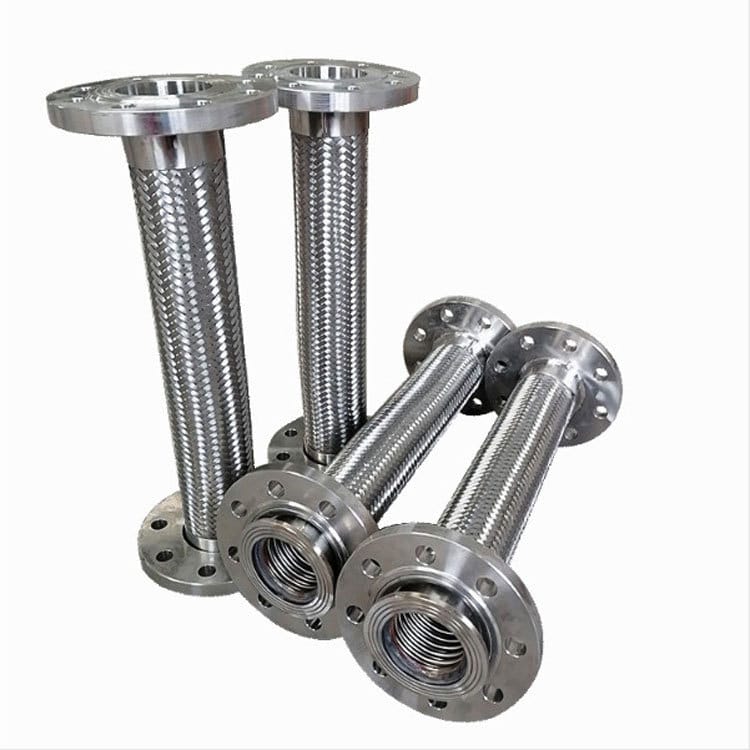
A typical flexible metal hose assembly contains several main components:
- Corrugated metal hose
- Stainless steel wire braid
- Braid collars or reinforcement components
- End fittings
- Welded or machined connections
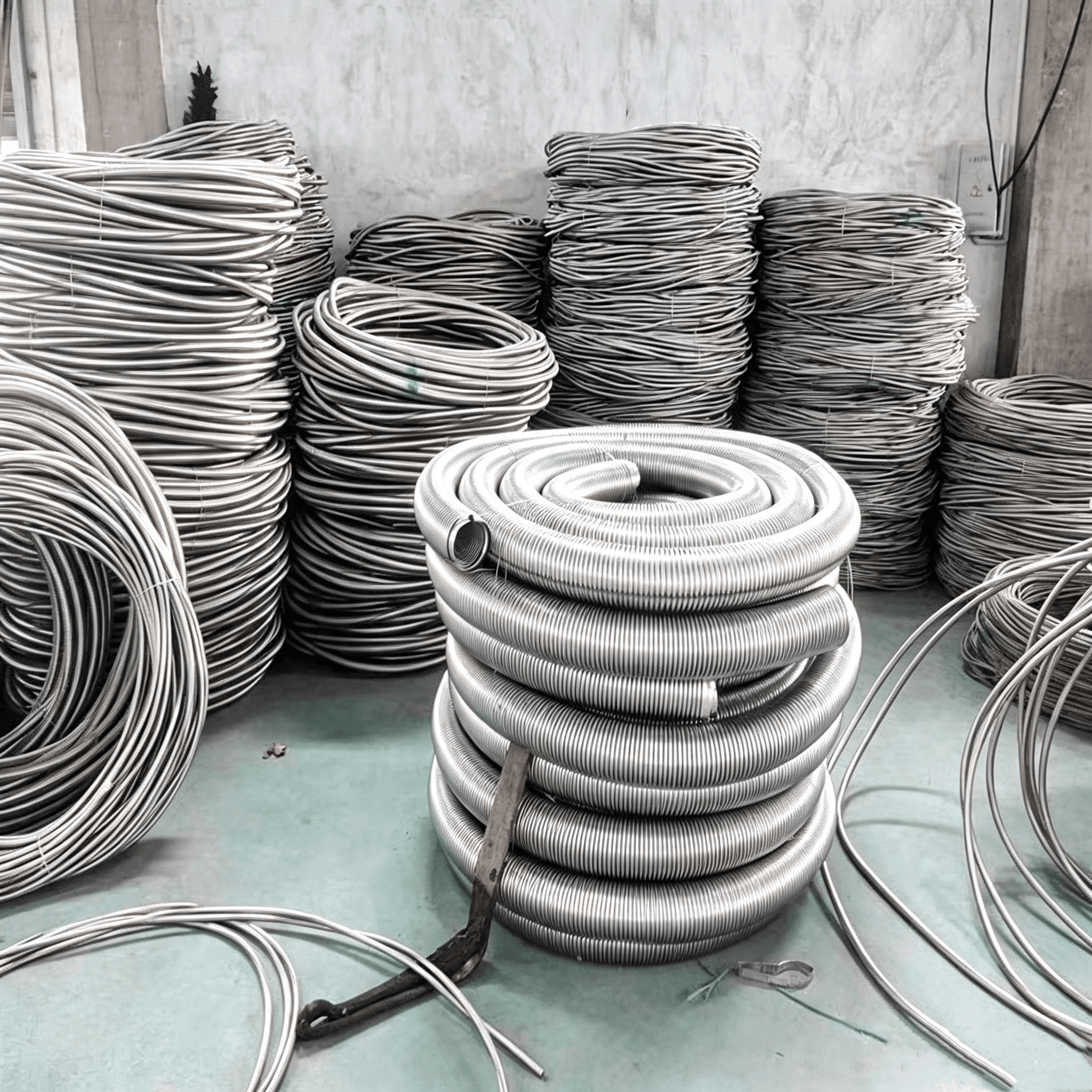
The corrugated hose forms the flexible section of the assembly.
Its geometry allows the hose to bend and accommodate controlled movement without using a conventional elastomeric hose body.
Manufacturers may add an external stainless steel braid when the application requires additional pressure support or mechanical stability.
The end fittings then connect the hose assembly to the customer’s pipework, valve, pump, machine,e or other equipment.
How Does Corrugated Metal Hose Provide Flexibility?
The flexibility comes from the corrugated structure.
A straight metal tube provides little flexibility. By forming the tube into repeated corrugations, the hose gains the ability to bend and respond to movement.
The corrugation geometry influences:
- Flexibility
- Bend characteristics
- Fatigue behavior
- Pressure capability
- Movement performance
For this reason, two metal hoses with the same nominal diameter may behave differently if their corrugation design differs.
Industrial buyers should therefore consider the complete hose specification instead of selecting only by size.
What Does the Stainless Steel Braid Do?
Many flexible metal hose assemblies include one or more layers of stainless steel wire braid.
The braid supports several important functions.
It helps restrain the hose when internal pressure acts on the corrugated tube and can improve the mechanical stability of the assembly.
Depending on the hose design and operating conditions, the braid may also help protect the corrugated section from external mechanical contact.
Common constructions may include:
- Unbraided metal hose
- Single-braid metal hose
- Multiple-braid configurations for specific requirements
The correct structure depends on the application.
Adding more braid does not automatically make every hose suitable for every pressure or movement condition.
Why Do Industrial Systems Use Flexible Metal Hose?
Rigid pipe works well when the system does not move.
However, many industrial installations involve vibration, movement,nt or thermal expansion.
Flexible metal hoses can help manage these conditions.
Vibration
Pumps, compressors, engines and rotating machinery can transmit vibration into rigid piping.
A properly selected flexible connection can help reduce the transfer of this movement.
Thermal Expansion
Metal piping expands as temperature increases.
A flexible metal hose can accommodate certain types of movement when engineers design and install the assembly correctly.
Installation Misalignment
Small differences between equipment connection points can make rigid pipe installation difficult.
A flexible hose provides additional installation flexibility.
Equipment Movement
Some machines require controlled relative movement between connected components.
A flexible metallic connection can support suitable applications where rigid piping would create excessive stress.
Common Materials
Stainless steel remains one of the most common material groups for flexible metal hose assemblies.
Depending on the project, customers may consider grades such as:
- 304
- 304L
- 316
- 316L
The correct material depends on several factors:
- Process medium
- Corrosion environment
- Temperature
- Pressure
- External conditions
- Customer specification
A higher-grade material is not automatically necessary for every application.
Material selection should match actual service conditions.
End Connection Options
A metal hose becomes useful only when it connects correctly to the surrounding system.
Common end configurations may include:
- Male threaded fittings
- Female threaded fittings
- Flanges
- Weld ends
- Tube ends
- Pipe ends
- Custom CNC machined fittings
OEM equipment sometimes requires non-standard connections.
In these cases, custom machining can help match an existing port, flange, or machine interface.
At Power Hydraulic, customers can provide drawings, samples, or connection specifications when standard fittings do not meet their requirements.
Where Are Flexible Metal Hose Assemblies Used?
Typical industrial applications include:
Pumps and Compressors
Flexible connections can help accommodate vibration between rotating equipment and pipework.
Steam and Heating Systems
Metallic hose construction suits many elevated-temperature applications when the hose specification matches the actual operating conditions.
Industrial Machinery
Machine builders may use flexible metal hose for process fluids, gases, exhaust-related systems,s or specialized connections.
Chemical and Process Equipment
Stainless steel construction can suit fluid-transfer applications where corrosion resistance matters.
Marine Equipment
Metal hoses may support applications where corrosion resistance and compact installation are important.
Exhaust Systems
Flexible metallic connections can accommodate vibration and thermal movement in suitable exhaust applications.
Key Factors When Selecting a Metal Hose
Before ordering, provide as much information as possible.
Important parameters include:
- Hose diameter
- Overall length
- Working temperature
- Working pressure
- Process medium
- End connection type
- Material
- Movement requirement
- Bend radius
- Installation environment
A hose selected only by diameter may not match the application.
The more complete the operating information, the easier it becomes to evaluate the correct hose structure.
Common Installation Mistakes
Even a correctly manufactured metal hose can perform poorly if the installation creates excessive stress.
Common problems include:
- Twisting the hose during installation
- Using an excessively tight bend
- Placing the bend too close to the fitting
- Forcing the hose into an incorrect length
- Applying movement in an unintended direction
- Using the hose to correct severe piping misalignment
Correct installation helps protect the corrugated section and end connections.
Flexible Metal Hose vs Rubber Hose
Neither material is universally better.
Metal hose may provide advantages in applications involving:
- Elevated temperatures
- Metallic piping systems
- Fire exposure considerations
- Certain aggressive environments
- Vacuum
- Thermal movement
Rubber hose may provide different flexibility characteristics and can suit many other hydraulic applications.
The correct choice depends on the system.
Why Manufacturing Experience Matters
A flexible metal hose assembly combines several manufacturing disciplines.
The supplier needs to understand:
- Corrugated hose construction
- Stainless steel braid
- Welding
- End fittings
- Material compatibility
- Dimensional requirements
- Installation conditions
Power Hydraulic builds its custom manufacturing service around metal hose products, hydraulic components, and CNC-machined fittings.
This manufacturing background allows us to evaluate not only the hose itself but also how the assembly connects to surrounding industrial equipment.
FAQ
Can metal hose absorb vibration?
A correctly selected and installed flexible metal hose can help accommodate vibration from suitable machinery and piping systems.
Is stainless steel metal hose suitable for high temperatures?
Metal hoses can suit elevated-temperature applications, but the actual allowable conditions depend on material, hose construction, pressure,e and the complete application.
Can you customize the fittings?
Yes. Custom threaded fittings, flanges, and CNC-machined end connections can be evaluated from drawings or samples.
Can you manufacture a replacement hose from an existing sample?
Yes. Existing assemblies can provide useful dimensional and connection information when original drawings are unavailable.
CTA
Need a custom flexible metal hose assembly?
Send us your hose size, length, temperature, pressure, medium, end connections, ns and application requirements for an engineering review.