How to Replace an Obsolete Machine Part When the OEM No Longer Supplies It
Industrial machinery can remain productive for many years after its original component supply chain changes.
A machine may continue to operate reliably while the manufacturer:
- Updates the equipment model
- Changes component suppliers
- Stops producing individual spare parts
- Discontinues support for older machinery
This creates a common maintenance problem:
The equipment still works, but the required replacement component is no longer available.
Custom manufacturing and reverse-engineering evaluation can provide another route.
Depending on the information available, replacement parts may be evaluated from:
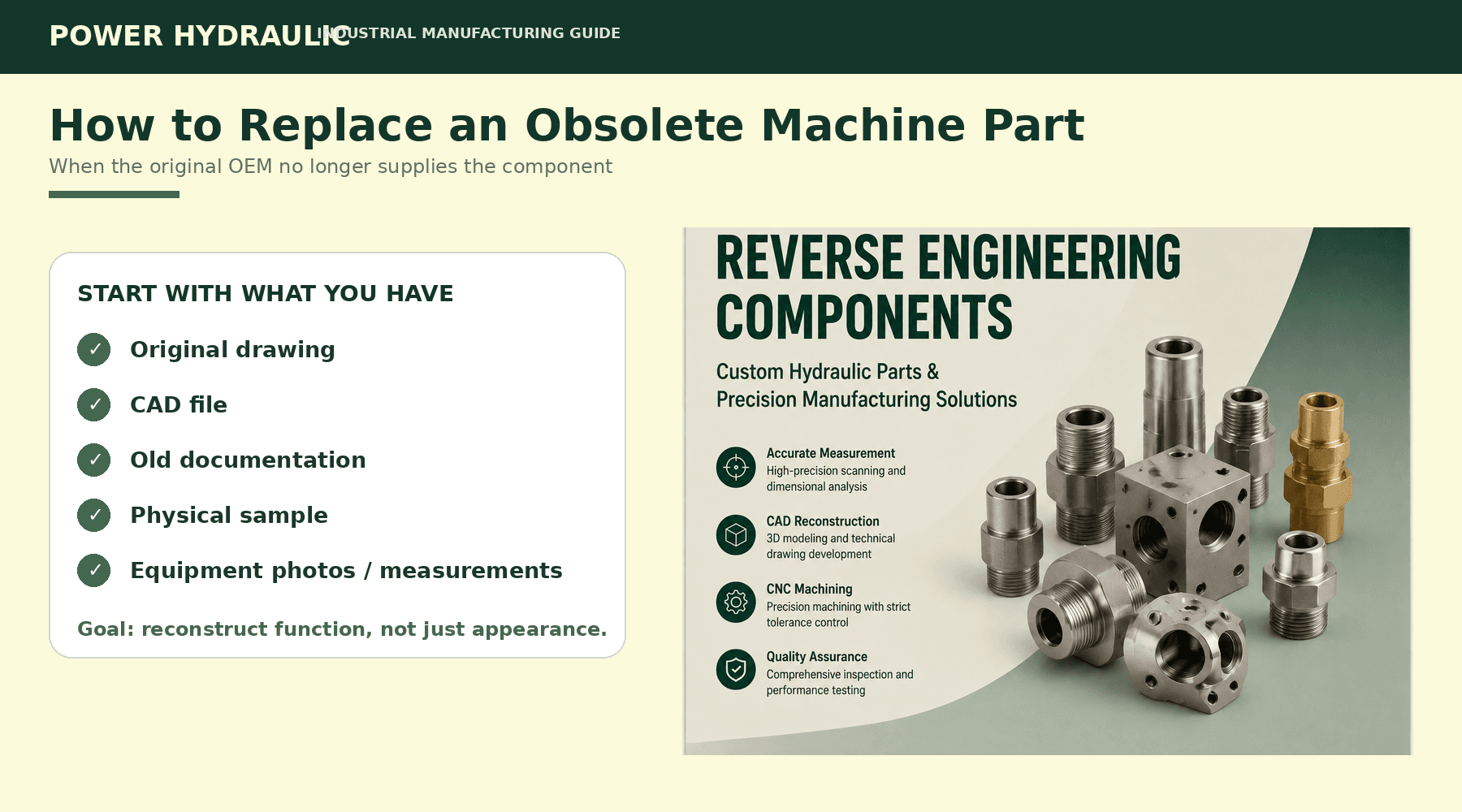
- Original drawings
- CAD files
- Historical documentation
- Existing samples
- Equipment measurements
- Application information
The objective should not simply be copying the visible shape of the old component.
A reliable replacement needs to reproduce the dimensions and interfaces that control fit and function.
Why Machine Parts Become Obsolete
The obsolete machine parts replacement can become difficult to source for several reasons.
The original supplier may:
- Discontinue the product
- Update the design
- Stop supporting older equipment
- Require customers to purchase a complete assembly
- Change regional distribution
Sometimes the original part is technically still available, but the buyer faces:
- Long lead times
- High purchasing quantities
- Limited availability
For industrial maintenance teams, these issues can contribute to prolonged downtime.
Start With the Information You Still Have
Before contacting a replacement component manufacturer, gather all available information.
Original Drawing
An existing engineering drawing offers an excellent starting point if it still reflects the installed component.
CAD File
A 3D file can help reconstruct the part geometry.
Historical Documentation
Old manuals, product catalogs, and technical records may contain valuable information.
Existing Sample
A physical component can reveal:
- Geometry
- Threads
- Hole positions
- Mating interfaces
- Sealing surfaces
Equipment Information
Photographs showing where and how the part fits can help explain its function.
Can a Manufacturer Reproduce a Part From a Sample?
In many cases, yes.
A physical sample may support a reverse-engineering process involving:
- Visual inspection
- Dimensional measurement
- Thread identification
- Material review
- Functional-surface identification
- CAD reconstruction
- Technical drawing preparation
- Prototype manufacturing
However, one point is particularly important:
A worn component is not necessarily identical to the original design.
Years of:
- Wear
- Corrosion
- Deformation
- Previous repairs
may have changed critical dimensions.
The manufacturer therefore needs to understand the function of the part, not only its current measurements.
Step 1: Inspect the Existing Part
The first step is understanding what the component does.
Questions may include:
- Where does it fit?
- What connects to it?
- Does it carry load?
- Does it contain or seal fluid?
- Does it rotate?
- Does it slide?
- Which surfaces show wear?
This helps distinguish important functional features from less critical geometry.
Step 2: Measure Critical Dimensions
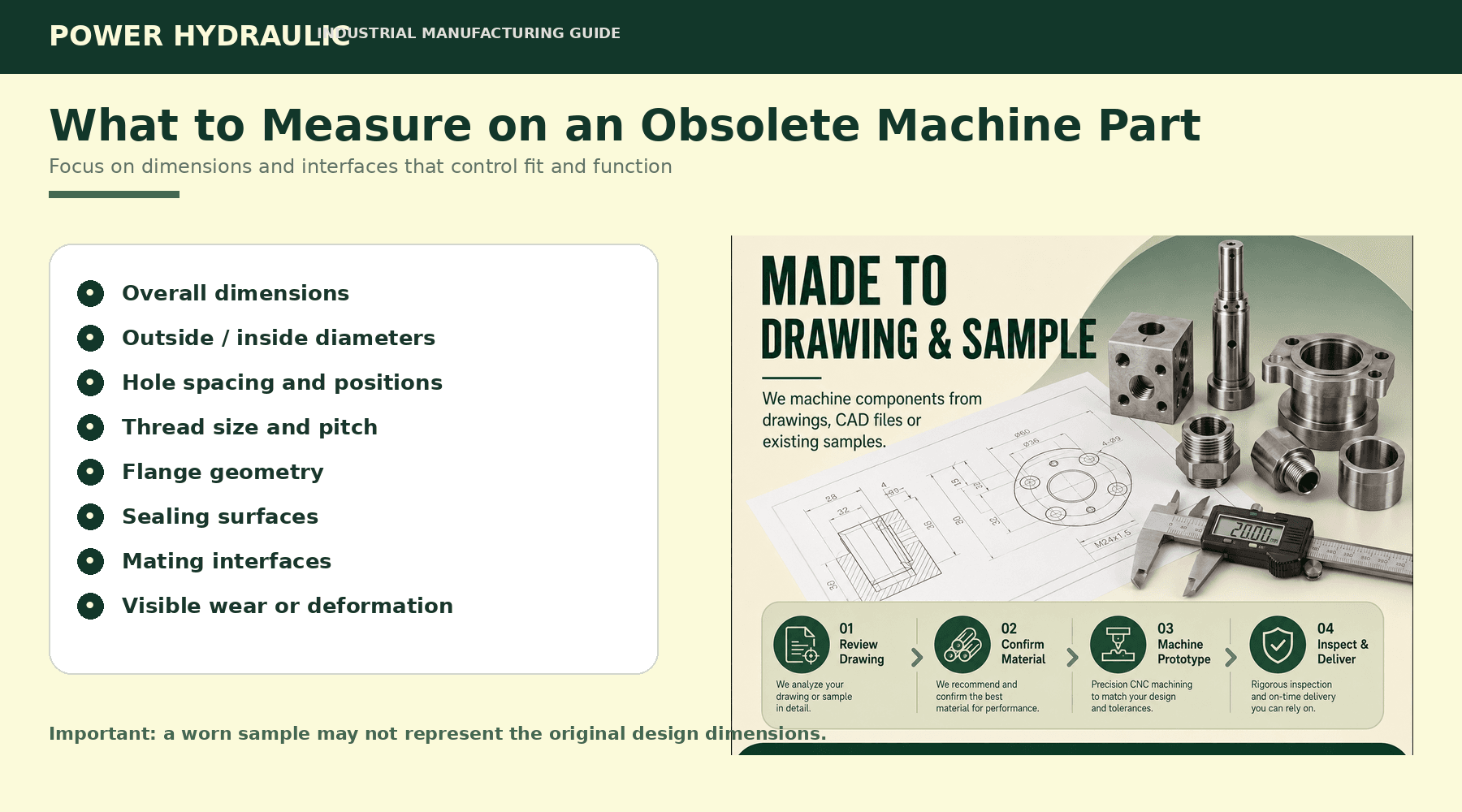
Measurements may include:
- Overall dimensions
- Outside diameter
- Bore diameter
- Hole spacing
- Thread size
- Thread pitch
- Flange geometry
- Sealing surfaces
- Mating interfaces
Do not automatically reproduce every worn measurement.
For example, a worn shaft diameter may be smaller than the original intended dimension.
Step 3: Identify Material Requirements
Material affects:
- Strength
- Wear resistance
- Corrosion resistance
- Weight
- Machinability
- Surface treatment
If the original material is unknown, provide information about:
- Operating environment
- Equipment function
- Fluid exposure
- Mechanical load
The replacement material should not be selected purely by visual appearance.
Step 4: Reconstruct or Confirm the Drawing
Once the geometry and functional requirements become clear, a manufacturing drawing can define:
- Critical dimensions
- Tolerances
- Thread specifications
- Material
- Surface treatment
- Inspection requirements
This drawing can later become the reference for repeat orders.
Step 5: Produce a Prototype or Small Trial Batch
Obsolete-component projects often benefit from prototype production.
Rather than immediately ordering a large quantity, the buyer can first confirm:
- Installation fit
- Thread compatibility
- Alignment
- Mating interfaces
- Overall function
If the obsolete machine parts replacement needs adjustment, the design can be revised before repeat production.
This makes small-batch manufacturing especially suitable for legacy equipment.
Step 6: Inspect and Confirm the New Component
Inspection should focus on features that affect function.
Examples include:
- Critical diameters
- Threads
- Hole positions
- Sealing surfaces
- Flatness
- Overall dimensions
- Mating interfaces
The confirmed drawing should become the inspection reference. obsolete machine parts replacement
When CNC Machining Works Well for Replacement Parts
CNC machining can suit many solid-metal obsolete machine parts replacements.
Examples include:
- Shafts
- Bushings
- Sleeves
- Adapters
- Flanges
- Blocks
- Housings
- Threaded connectors
- Hydraulic components
- Mounting parts
Manufacturing may involve:
- CNC turning
- CNC milling
- Drilling
- Boring
- Thread machining
- Surface treatment
More complex components may also require welding or assembly.
Why Small-Batch Manufacturing Makes Sense
Older machinery usually does not require thousands of replacement parts.
The requirement may instead be:
- 1 prototype
- 5 spare parts
- 20 maintenance components
- 50 pieces
- 100 pieces
- Recurring small batches
Low-volume manufacturing helps industrial buyers obtain the quantity they actually need.
It can also reduce unnecessary inventory for specialized spare parts.
What If the Original Component Failed?
Do not automatically duplicate a failed part.
First investigate why it failed.
Possible factors include:
- Wear
- Corrosion
- Incorrect material
- Excessive load
- Poor lubrication
- Misalignment
- Incorrect installation
- Changed operating conditions
If the application has changed, the new component may require engineering review rather than direct duplication.
Replacement Part RFQ Checklist
When requesting a quotation, provide:
Photos
Existing Sample
Available Drawing
Material Information
Required Quantity
Equipment Application
Critical Dimensions
Known Failure Information
Even incomplete information can provide a useful starting point.
OEM Replacement Parts vs Original Parts
A custom obsolete machine parts replacement should not focus only on visual similarity.
The technical objective is to manufacture a component that matches the confirmed requirements of the equipment.
Important factors include:
- Geometry
- Dimensions
- Material
- Interfaces
- Machining process
- Inspection
For industrial users, function matters more than appearance.
FAQ
Can an obsolete machine part be reproduced without the original drawing?
In many cases, an existing sample and equipment information can provide a useful starting point.
Can a replacement part be made from a physical sample?
Yes. A sample can help determine geometry, threads, and interfaces, although wear should be considered during measurement.
How do manufacturers measure a worn component?
They may compare multiple dimensions, mating parts, historical documentation, and functional requirements instead of copying every worn measurement directly.
Should I make a prototype first?
A prototype or trial batch often helps verify fit and function before repeat production.
Can discontinued parts be manufactured in small quantities?
Yes. Many CNC replacement-part projects suit prototype and low-volume production.
Have an Obsolete Part but No Drawing?
Send us your:
Photos · Existing Sample · Equipment Information · Quantity · Available Dimensions
Power Hydraulic can review whether the component is suitable for custom manufacturing or reverse-engineering evaluation.


